Back-to-Back Shifts (Clopening)
New York City: 11 hours, at employers with 20+ employees
Leaving less than 11 hours between shifts
On the new shift form, select the covered NYC location and employee.
Scheduling a shift starting only 7 hours after the prior one ends triggers a warning.
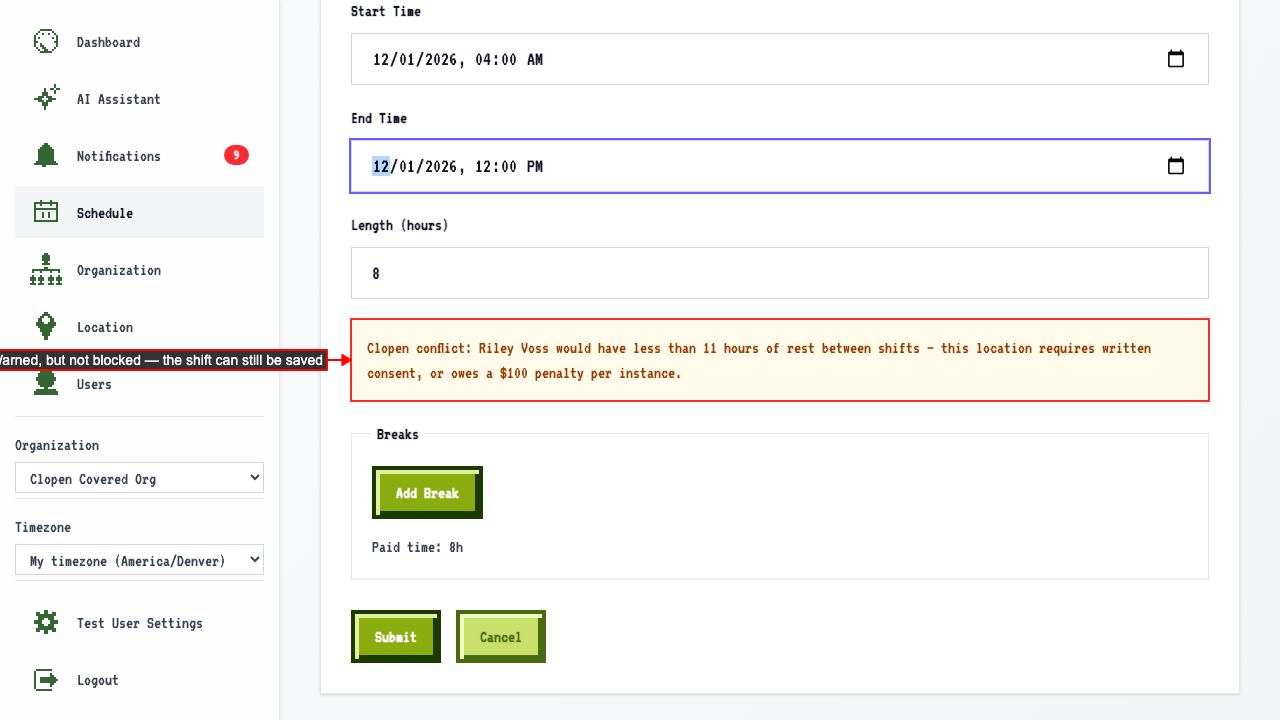 Moving the start time to 11+ hours after the prior shift clears the warning.
Smaller employers aren't covered by NYC's 20-employee rule
On the new shift form, select the (under-gate) New York location and employee. Scheduling the same 7-hour-gap shift shows no clopen warning — this org is under NYC's 20-employee gate.
Oregon: 10 hours, at employers with 500+ employees
Leaving less than 10 hours between shifts
On the new shift form, select the covered Portland location and employee.
Scheduling a shift starting only 7 hours after the prior one ends triggers a warning.
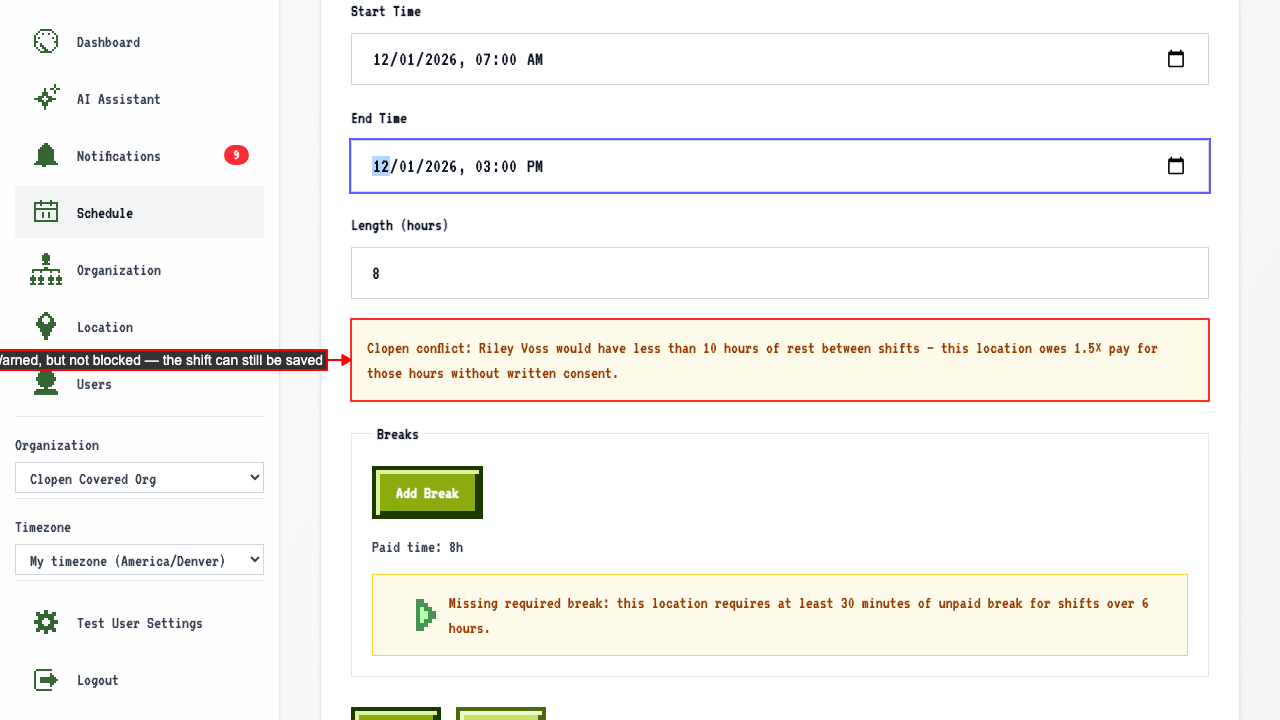 Moving the start time to 10+ hours after the prior shift clears the warning.
Seattle: 10 hours, at employers with 500+ employees
Leaving less than 10 hours between shifts
On the new shift form, select the covered Seattle location and employee.
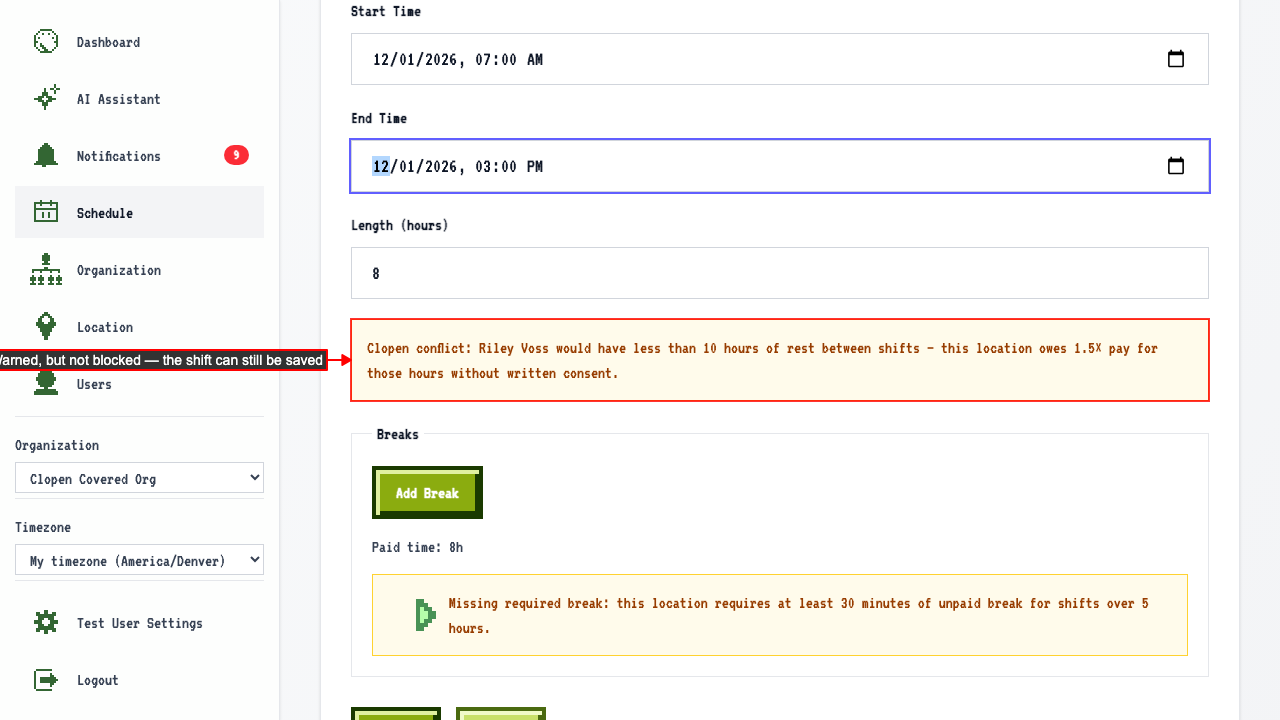
Scheduling a shift starting only 7 hours after the prior one ends triggers a warning.
Philadelphia: 9 hours, at employers with 250+ employees and 30+ locations
Leaving less than 9 hours between shifts
On the new shift form, select the covered Philadelphia location and employee.
Scheduling a shift starting only 7 hours after the prior one ends triggers a warning.
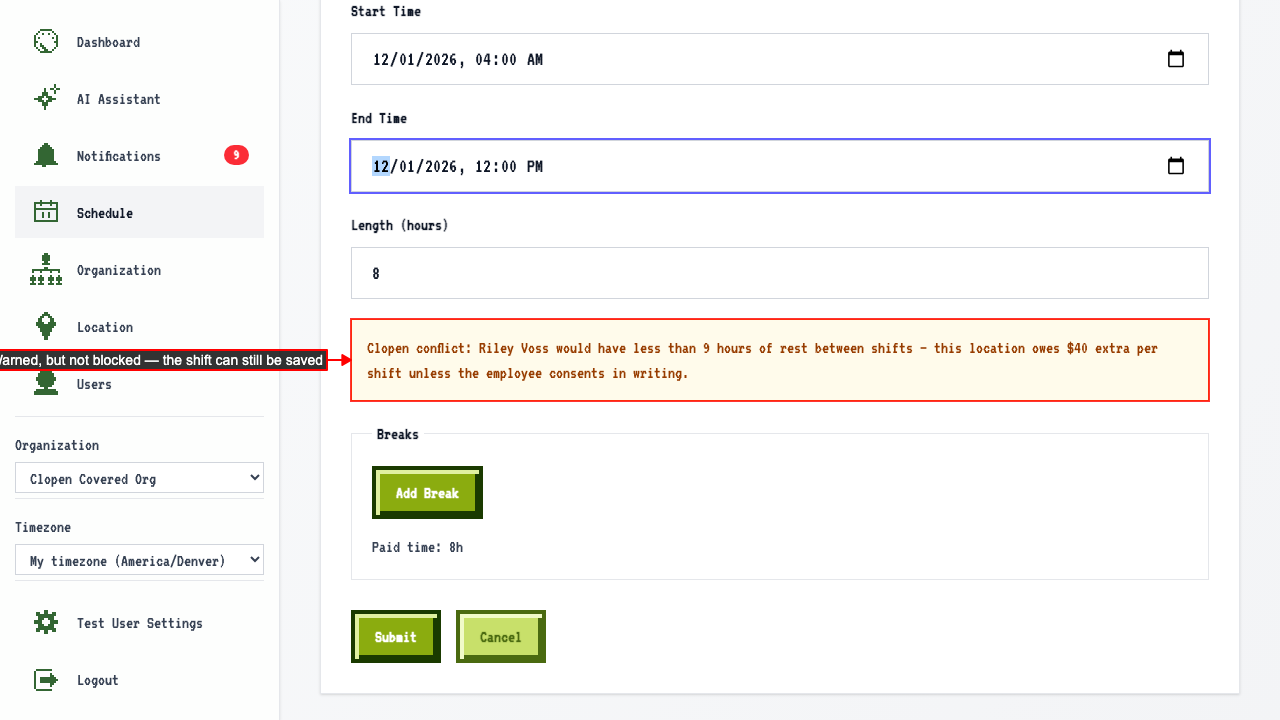 Moving the start time to 9+ hours after the prior shift clears the warning.
Smaller employers aren't covered by Philadelphia's employee-AND-location rule
On the new shift form, select the (under-gate) Philadelphia location and employee. Scheduling the same 7-hour-gap shift shows no clopen warning — this org is under Philadelphia's coverage threshold.
Washington, D.C.: 10 hours, at employers with 50+ employees
Leaving less than 10 hours between shifts
On the new shift form, select the covered Washington, D.C. location and employee.
Scheduling a shift starting only 7 hours after the prior one ends triggers a warning.
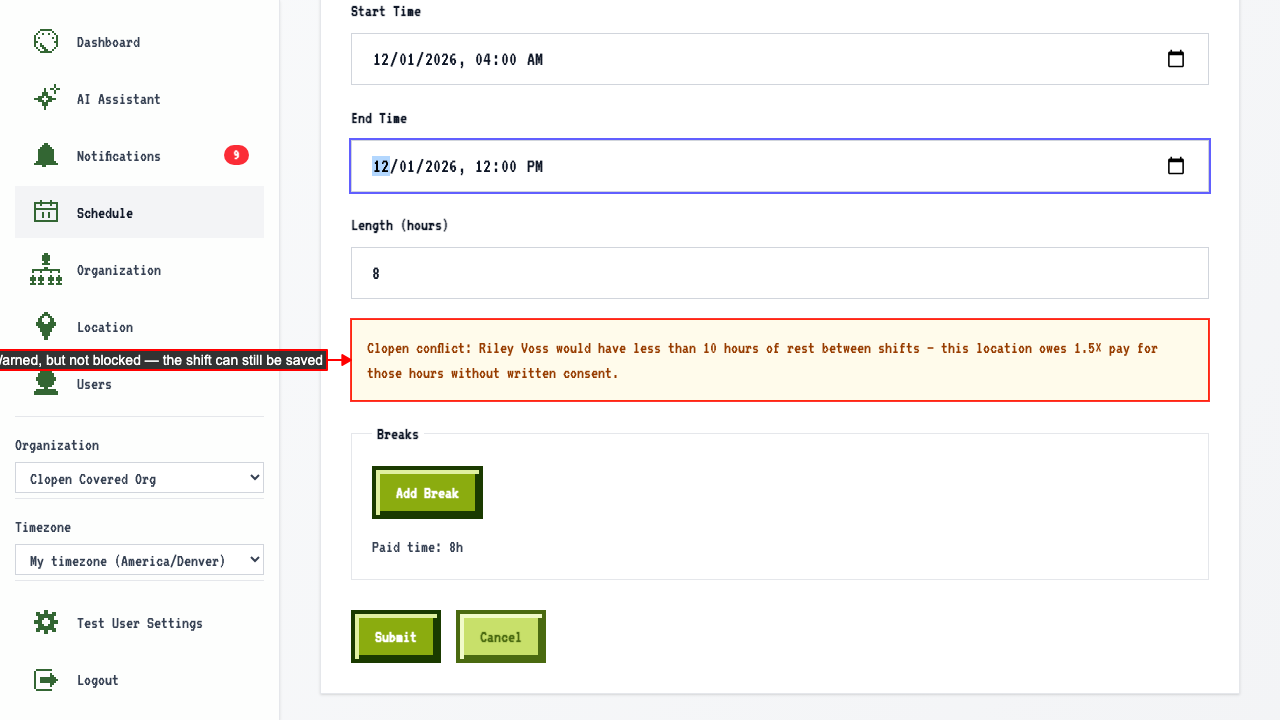 Moving the start time to 10+ hours after the prior shift clears the warning.
Chicago: 10 hours, at employers with 100+ employees
Leaving less than 10 hours between shifts
On the new shift form, select the covered Chicago location and employee.
Scheduling a shift starting only 7 hours after the prior one ends triggers a warning.
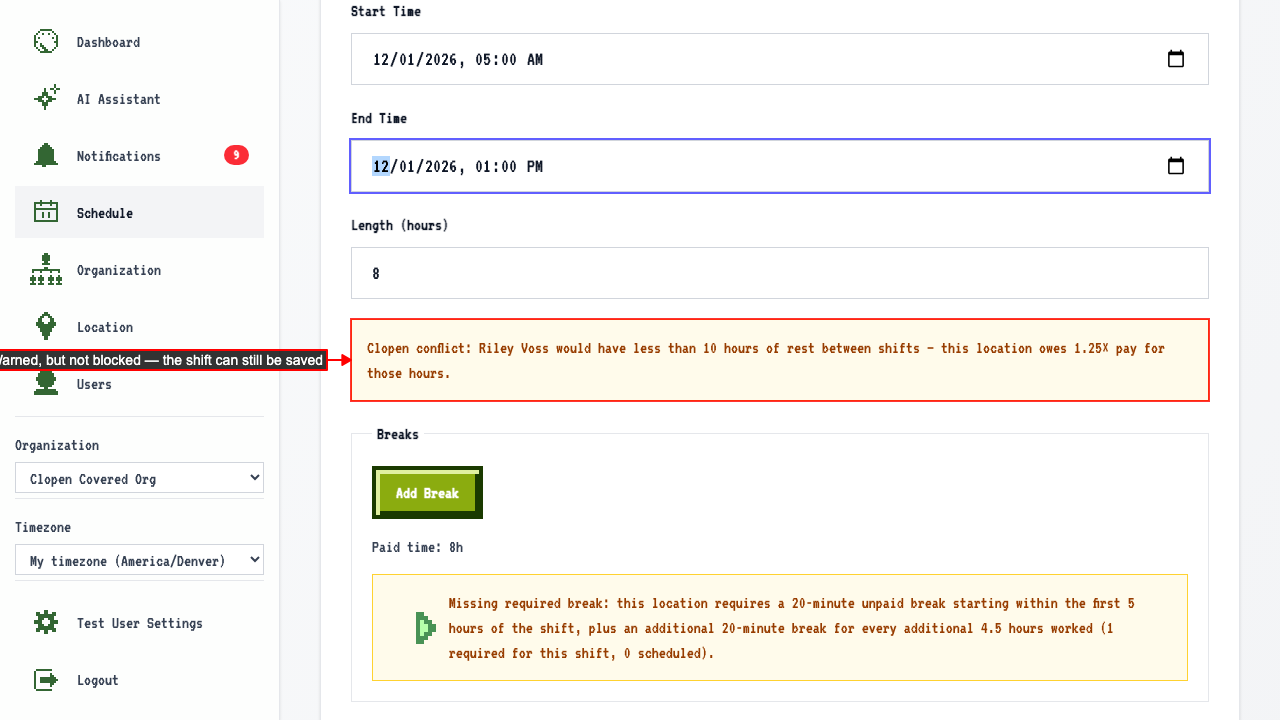 Moving the start time to 10+ hours after the prior shift clears the warning.
Los Angeles: 10 hours, at employers with 300+ employees
Leaving less than 10 hours between shifts
On the new shift form, select the covered Los Angeles location and employee.
Scheduling a shift starting only 7 hours after the prior one ends triggers a warning.
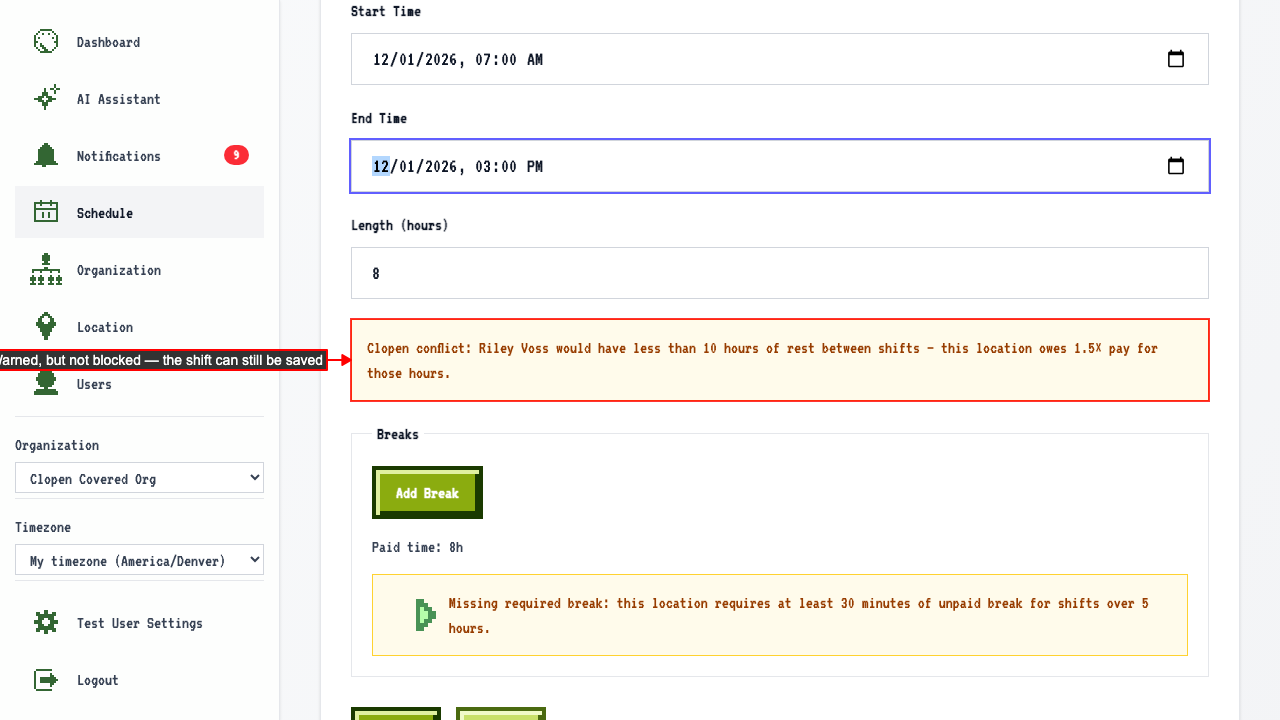 Moving the start time to 10+ hours after the prior shift clears the warning.
Los Angeles County, unincorporated: 10 hours, at employers with 300+ employees
Leaving less than 10 hours between shifts
On the new shift form, select the covered East Los Angeles (unincorporated LA County) location and employee.
Scheduling a shift starting only 7 hours after the prior one ends triggers a warning — East Los Angeles is matched by name as an unincorporated LA County community, not as the city of Los Angeles.
Moving the start time to 10+ hours after the prior shift clears the warning.
Berkeley: 11 hours, at employers with 10+ employees
Leaving less than 11 hours between shifts
On the new shift form, select the covered Berkeley location and employee.
Scheduling a shift starting only 7 hours after the prior one ends triggers a warning.
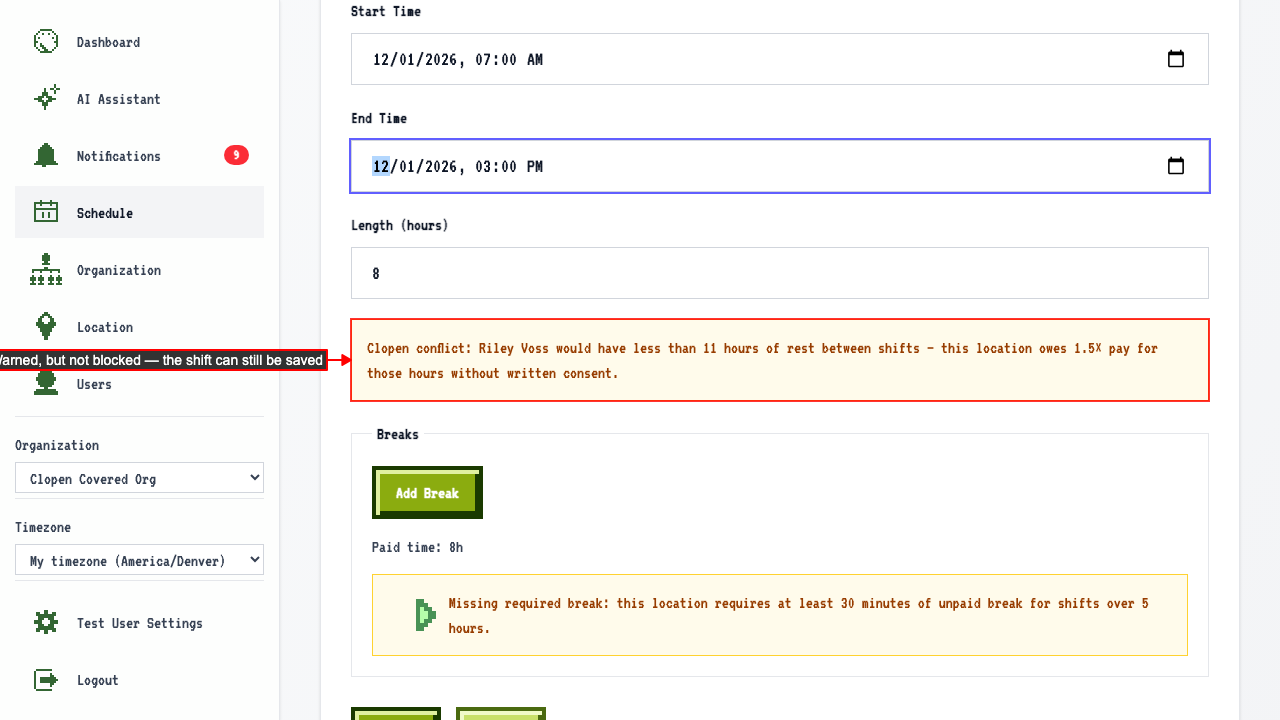 Moving the start time to 11+ hours after the prior shift clears the warning.
Emeryville: 11 hours, at employers with 56+ employees
Leaving less than 11 hours between shifts
On the new shift form, select the covered Emeryville location and employee.
Scheduling a shift starting only 7 hours after the prior one ends triggers a warning.
Moving the start time to 11+ hours after the prior shift clears the warning.